
Fats and Oils for CKD Patients
Managing fats and oils for CKD patients is an essential part of a healthy eating diet for chronic kidney disease patients. Chronic Kidney Disease (CKD) significantly increases the risk of heart disease, and unhealthy fat choices can further damage both kidney and cardiovascular health. Selecting the right type of fats, using appropriate cooking oils, and maintaining portion control can help slow disease progression and improve overall well-being.



Why Fats Are Important in a Renal Diet
Fats are a vital source of energy and are required for:
- Hormone production
- Cell membrane integrity
- Absorption of fat-soluble vitamins (A, D, E, and K)
However, renal diet for CKD patients, fat quality matters more than quantity. Unhealthy fats can raise cholesterol levels, increase inflammation, and worsen kidney function over time.
Healthy Fats and Oils for CKD Patients
Healthy fats are mainly rich in:
- Monounsaturated fatty acids (MUFAs)
- Polyunsaturated fatty acids (PUFAs)
These fats help improve lipid profiles, reduce inflammation, and lower the risk of cardiovascular disease, which is closely linked to eat right to protect your kidney health.
Best Cooking Oils for CKD Patients
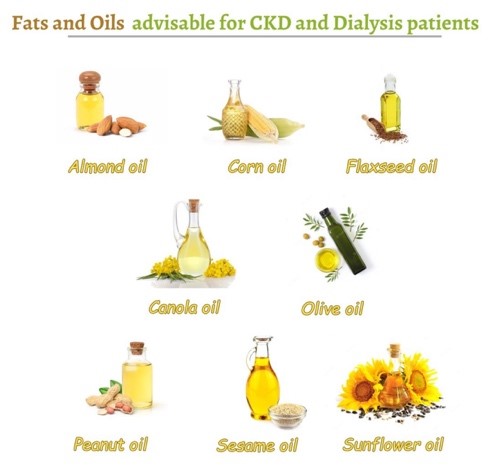
Olive Oil
Olive oil is rich in MUFAs and antioxidants and is naturally low in sodium, potassium, and phosphorus. It supports heart health and reduces oxidative stress.
Best uses:
- Sautéing at moderate heat
- Baking
- Salad dressings
Its moderate smoke point makes it suitable for everyday cooking.
Canola Oil
Canola oil contains both MUFAs and PUFAs, including omega-3 and omega-6 fatty acids. It has a high smoke point, making it versatile and kidney-friendly.
Best uses:
- Cooking
- Baking
- Light frying
Avocado Oil
Avocado oil is extremely high in MUFAs and has a very high smoke point, making it ideal for high-heat cooking.
Best uses:
- Roasting
- Grilling
- Stir-frying
Its heat stability makes it a good alternative to refined oils for high-temperature cooking.
Safflower Oil and Sunflower Oil
These oils are good sources of PUFAs, primarily omega-6 fatty acids, and are rich in vitamin E.
Best uses:
- Cooking at moderate to high heat
- Baking
They should be used in moderation and rotated with MUFA-rich oils to maintain a balanced fat intake.
Flaxseed Oil and Walnut Oil
Flaxseed oil and walnut oil are rich in omega-3 fatty acids, which help reduce inflammation and support cardiovascular health.
Important note for CKD patients:
These oils have a low smoke point and should never be heated.
Best uses:
- Salad dressings
- Drizzling over cooked food after cooking
- Cold preparations only
Fats to Limit or Avoid in CKD
Certain fats can worsen kidney disease and increase cardiovascular risk.
These include:
- Saturated fats
- Industrially produced trans fats
Excess intake may lead to:
- Increased LDL cholesterol
- Inflammation
- Faster decline in kidney function
Avoid or limit daily consumption of:
- Ghee
- Butter
- Coconut oil
- Fried and ultra-processed foods
Moderation is especially important in advanced stages of CKD.
How to Choose Kidney-Friendly Oils
To protect kidney and heart health:
- Prefer unrefined, cold-pressed (kacchi ghani) or wood-pressed oils
- Avoid refined and repeatedly heated oils
- Rotate oils instead of relying on a single type
A renal dietitian can help decide the best oil and quantity based on CKD stage, lipid profile, and overall health condition.
Personalized Fat Intake for CKD Patients
The recommended intake of fats and oils for CKD patients varies depending on:
- Stage of chronic kidney disease
- Presence of diabetes or heart disease
- Dialysis or non-dialysis status
- Individual laboratory reports
Personalized nutrition planning ensures adequate energy intake without increasing cardiovascular or renal stress.
Conclusion
Choosing the right fats and oils for CKD patients plays a critical role in protecting kidney function and reducing heart disease risk. Oils rich in MUFAs and PUFAs, such as olive oil, canola oil, avocado oil, and cold-use omega-3 oils, should be preferred, while saturated and trans fats must be limited. With proper oil selection, portion control, and professional guidance, CKD patients can safely include fats as part of a balanced renal diet.
FAQs
Which oil is best for CKD patients?
Cold-pressed fats and oils for CKD patients such as olive oil, canola oil, rice bran oil, mustard oil, and avocado oil are generally suitable when used in recommended amounts.
Can CKD patients use oil for frying?
Yes, but only fats and oils for CKD patients with a high smoke point, such as avocado oil or canola oil, should be used, and frying should be limited.
Are omega-3 oils safe for CKD patients?
Ragi is high in potassium and phosphorus. It is generally limited or avoided as grains for CKD patients, especially in later stages.
Are refined oils harmful for CKD patients?
Yes. Refined and repeatedly heated oils can increase inflammation and negatively impact both kidney and heart health.
How much oil should a CKD patient consume daily?
Oil requirements vary based on CKD stage, calorie needs, and lab values. A renal dietitian should determine the exact quantity.

