
Herbs and spices for CKD patients
Many individuals with CKD need to closely monitor their daily intake of sodium (salt). For many people, this creates the fear of “giving up taste” in food. Fortunately, meals can still be flavorful and enjoyable for CKD patients by using herbs and spices wisely.
Herbs and spices for CKD patients help add flavor, aroma, and enjoyment to meals while supporting eat right to protect your kidney health With the right selection and proper portion control, herbs and spices can make daily meal preparation healthier and more satisfying for healthy eating for CKD patients and their families.

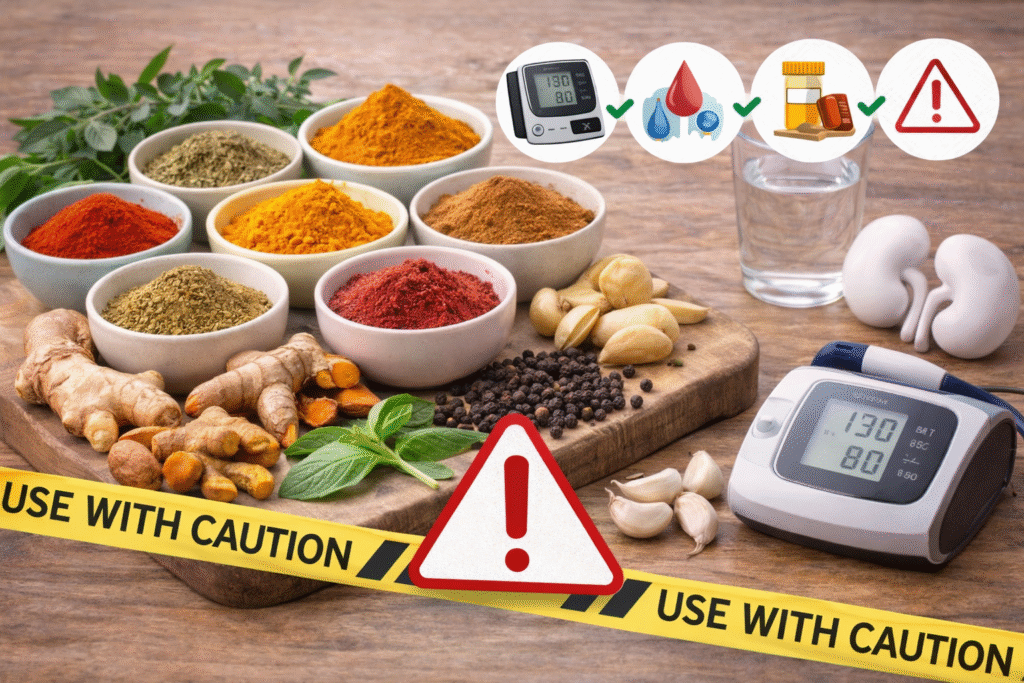
Herbs, Spices, and Kidney Disease
Herbs and spices for CKD patients influence how the body functions. When the kidneys are not working at full capacity, certain ingredients may affect overall health. Many herbs and spices do not contain added sodium, making them excellent alternatives to salt.
However, some herbs and spices may contain potassium, interact with blood pressure, or affect fluid balance. Certain herbal products may also act like medicines in the body. Therefore, it is important to understand how to use herbs and spices safely before adding them freely to the diet if you have CKD.
Herb and spice use should always be matched with dietary modifications in CKD stage, dialysis status, and laboratory values.

The benefits of cooking with herbs and spices for CKD patients
Using herbs and spices for CKD patients offers several practical benefits:
- Reduces the need for added salt
- Provides natural antioxidants
- Improves appetite when food feels bland or repetitive
- Helps patients enjoy meals while following a renal diet
- Supports long-term dietary adherence
When meals taste better, it becomes easier for CKD patients to consistently follow kidney-friendly eating habits.
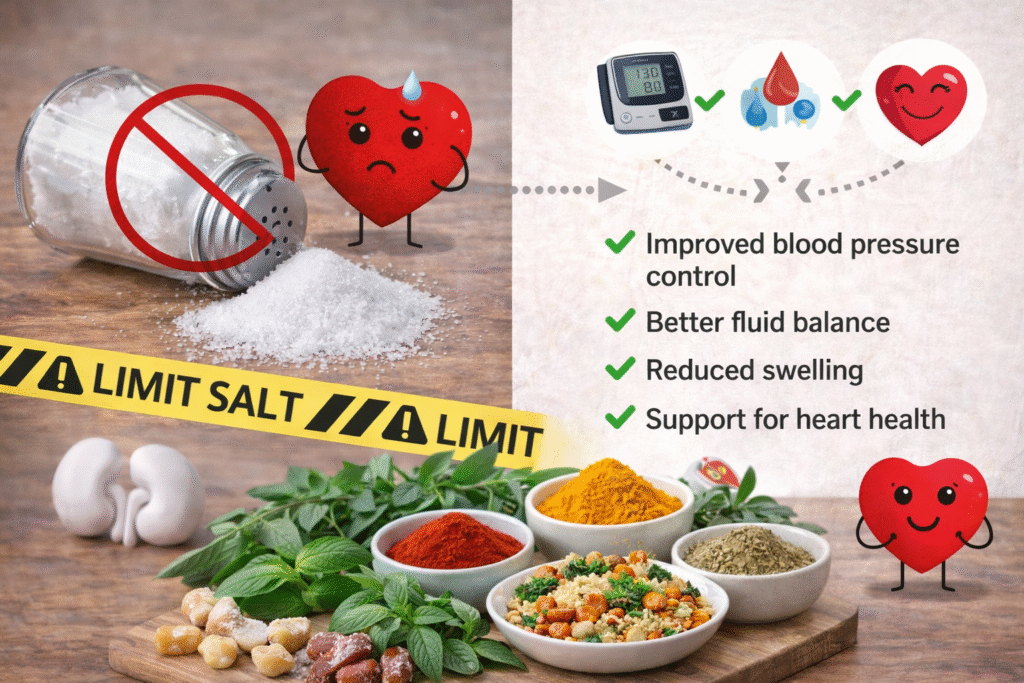
Why Limiting Salt Is Important for Kidney Health
Excess sodium increases fluid retention, raises blood pressure, and places extra stress on the kidneys and heart. Replacing salt with herbs and spices for CKD patients reduces kidney workload and supports better fluid and blood pressure control.
Benefits of lowering salt intake include:
- Improved blood pressure control
- Better fluid balance
- Reduced swelling
- Support for heart health
This simple change can lead to meaningful long-term health improvement.
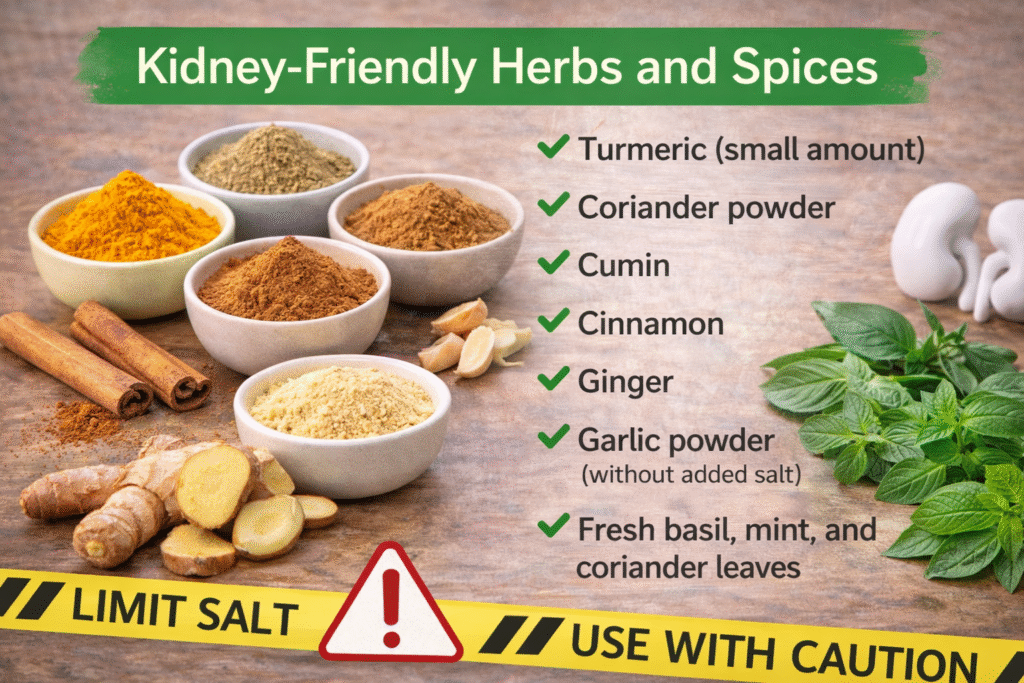
Kidney-Friendly Herbs and Spices
Many herbs and spices are safe when used in small quantities.
Examples of commonly used herbs and spices for CKD patients include:
- Turmeric (small amount)
- Coriander powder
- Cumin
- Cinnamon
- Ginger
- Garlic powder (without added salt)
- Fresh basil, mint, and coriander leaves
When used appropriately, these herbs and spices enhance flavor without harming kidney function.
Herbs and spices to use with caution or avoid
Not all herbs and spices are suitable for CKD patients.
Use caution or avoid:
- Excessive chili powder
- Star anise in large amounts
- Ready-made spice mixes with added salt or MSG
- Herbal supplements or “kidney cleansing” products without medical advice
Even natural products can cause harm if taken in excess or without supervision.
How to Use Herbs and Spices Safely
A pinch is enough. Herbs and spices for CKD patients work best when used lightly.
Safe usage tips:
- Use fresh or dried herbs in small amounts
- Avoid daily heavy use of the same spice
- Pair spices with kidney-friendly oils (small amounts of cold-pressed oils)
- Limit frequent use of ghee, butter, and coconut oil
- Avoid combining multiple strong spices in one meal
Moderation is the key.
When to Consult a Nephrologist or Renal Dietitian
If blood reports change, symptoms worsen, or new supplements are planned, professional guidance is essential. Herbs and spices for CKD patients should always align with potassium, phosphorus, and blood pressure levels.
A nephrologist or renal dietitian can guide safe use based on:
- CKD stage
- Dialysis status
- Lab values
- Other medical conditions, such as diabetes or heart disease
Conclusion
Managing kidney disease does not mean giving up flavor. Herbs and spices for CKD patients help reduce salt intake, improve taste, and support healthier eating habits. With mindful choices and controlled portions, CKD patients can enjoy their meals while protecting kidney and heart health. Small changes today can lead to better health tomorrow.
FAQs
Can I use turmeric with CKD?
Yes, turmeric can be used in small amounts. Like all herbs and spices for CKD patients, it should not be overused.
What naturally repairs kidneys?
There is no instant repair. However, a balanced diet, good hydration, blood pressure control, and careful use of herbs and spices support kidney health.
Which spices are good for CKD?
Cumin, coriander, cinnamon, ginger, and small amounts of turmeric are commonly used herbs and spices for CKD patients.
Which herbs are not good for kidneys?
Strong herbal supplements, detox products, and high-dose herbal preparations may stress the kidneys and should be avoided unless prescribed.
Can herbs and spices replace salt completely?
Yes, herbs and spices for CKD patients can replace most salt while keeping food tasty and enjoyable.
Disclaimer
This content is for general information only and does not replace medical advice. The use of herbs and spices for CKD patients varies based on individual health, CKD stage, and lab reports. Always consult your nephrologist or renal dietitian before making dietary changes.

