
Legumes and Pulses for CKD Patients
Choosing the right food becomes confusing when you are living with kidney disease. One common question asked in clinics is about legumes and pulses for CKD patients. Pulses are a daily staple in Indian homes, but kidney health changes how much and how often they should be eaten. This guide explains legumes and pulses for CKD patients in a simple, practical way so patients and caregivers can make safer food choices.

Are legumes and pulses good for kidney patients?
Legumes and pulses for CKD patients can be both helpful and harmful, depending on the stage of kidney disease. Pulses are rich in plant protein, but they also contain phosphorus and potassium.
- In CKD stages 1 to 4, the kidneys struggle to remove protein waste
- Excess protein waste can burden damaged kidneys
- That is why legumes and pulses for CKD patients are limited in early stages
For dialysis patients, the situation changes.
- Dialysis removes protein from the blood
- Protein needs increase to prevent weakness and muscle loss
In this stage, legumes and pulses for CKD patients are encouraged in proper portions

How much protein is there in legumes and pulses?
Understanding protein content helps manage legumes and pulses in CKD patients wisely.
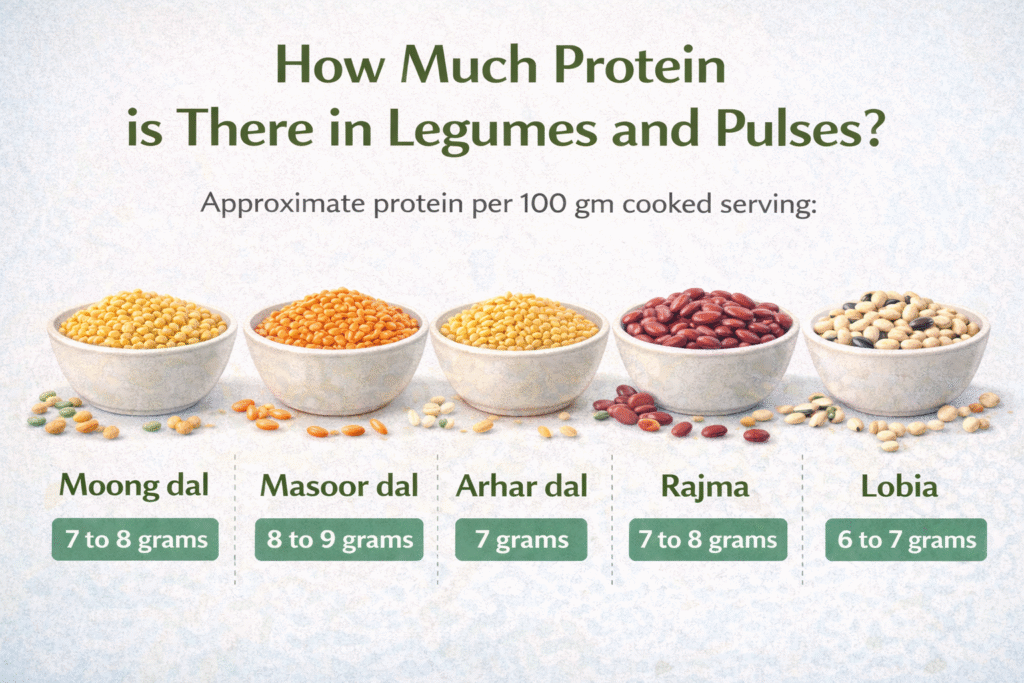
Approximate protein per 100 gm cooked serving:
- Moong dal: 7 to 8 grams
- Masoor dal: 8 to 9 grams
- Arhar dal: 7 grams
- Rajma: 7 to 8 grams
- Lobia: 6 to 7 grams
For legumes and pulses for CKD patients, portion size matters more than complete avoidance.
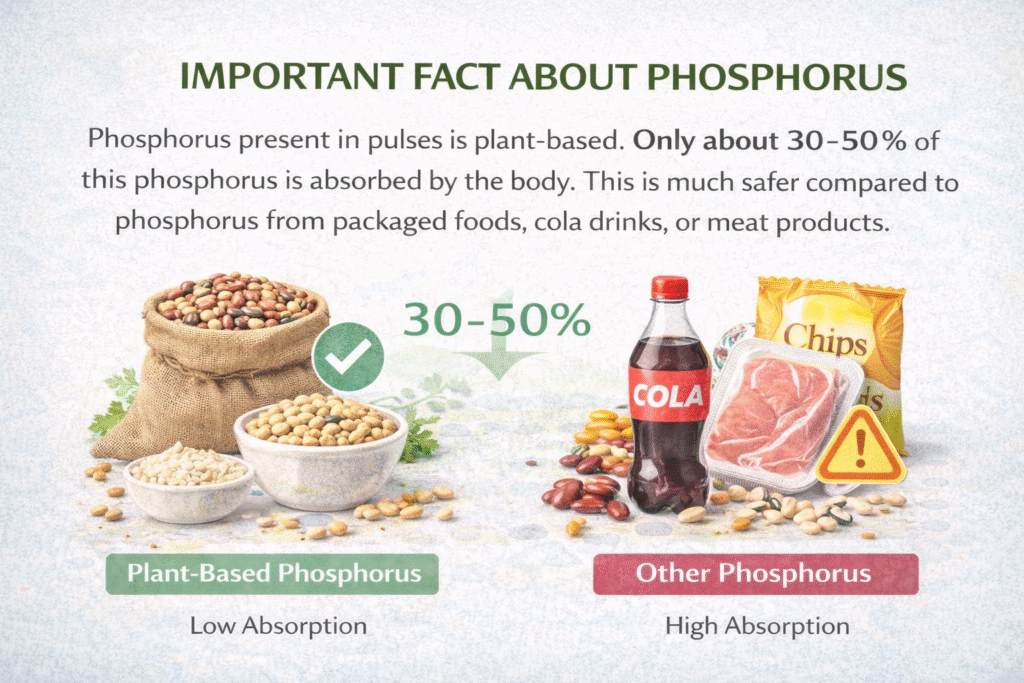
IMPORTANT FACT ABOUT PHOSPHORUS
Phosphorus present in pulses is plant-based. Only about 30–50% of this phosphorus is absorbed by the body. This is much safer compared to phosphorus from packaged foods, cola drinks, or meat products.
WHY SPLIT DALS ARE BETTER?
Split dals like moong dal and masoor dal are:
- Easier to digest
- Lower in potassium per serving
- Less likely to cause bloating
Whole pulses like rajma and chole contain higher potassium and phosphorus and should be limited, especially in early CKD.
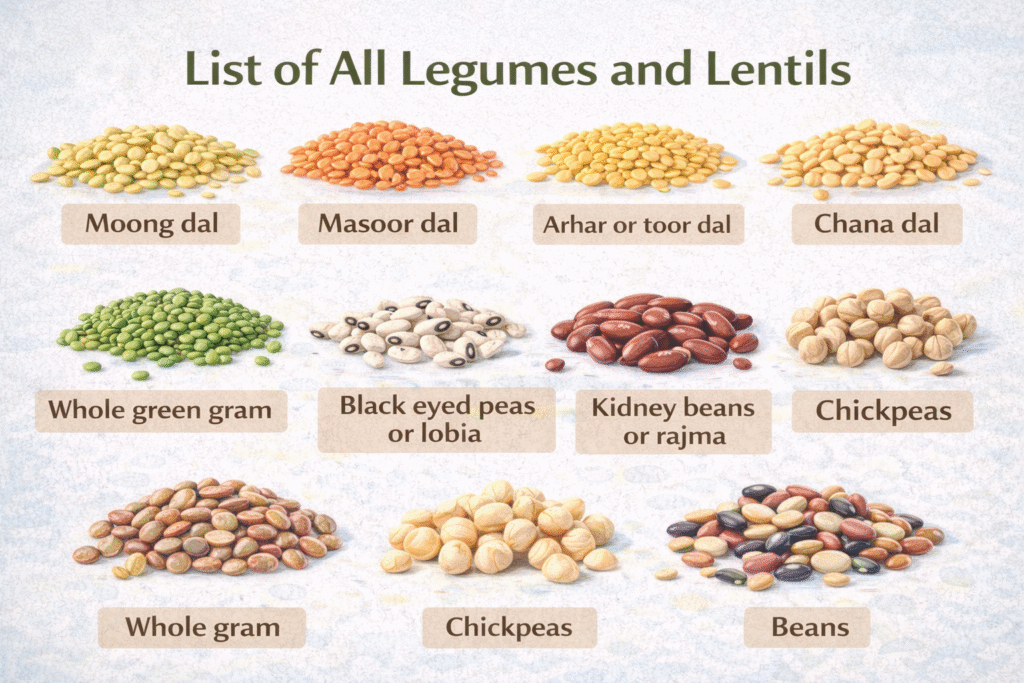
List of all legumes and lentils
Common options seen in Indian diets include Vegetables, Herbs and Spices, Fats and Oils and discussed for legumes and pulses for CKD patients include:
- Moong dal
- Masoor dal
- Arhar or toor dal
- Chana dal
- Whole green gram
- Black eyed peas or lobia
- Kidney beans or rajma
- Chickpeas
- Beans
Which legumes and pulses are allowed in CKD?
For non-dialysis stages, legumes and pulses for CKD patients are usually limited to one serving per day.
Generally better-tolerated options:
● Split moong dal
● Masoor dal
● Arhar dal
● Lobia in small portions
Tips for safer use:
- Soak overnight and discard the soaking water
- Cook thoroughly
- Avoid thick or creamy gravies
WHICH LEGUMES AND PULSES SHOULD BE LIMITED OR AVOIDED?
• Rajma in early CKD
• Chickpeas in large amounts
• Mixed bean preparations
• Dry-roasted pulses
These increase the phosphorus and potassium load.
PRACTICAL DAILY TIPS
• Quantity matters more than the type of dal
• 2–3 tablespoons of cooked dal is usually safe
• Avoid drinking the dal water
• Pulses may cause gas; this is not kidney damage
• Proper soaking reduces bloating
DIALYSIS-SPECIFIC ADVICE
• Dialysis patients need more protein
• Dal can be combined with rice or roti for better protein quality
• Blood reports decide allowance; high potassium or phosphorus may need restriction
CONCLUSION
Food does not have to be feared with healthy eating for kidney disease. When chosen wisely, legumes and pulses for CKD patients can support strength without harming kidney health. The key is knowing your Dietary Modification for CKD stage, watching portion sizes, and using simple cooking methods. The right amount matters more than total restriction.
FAQs
What legumes are good for kidney disease?
Moong dal, masoor dal, and Arhar dal are commonly used for CKD patients in controlled portions.
Which dal is better for CKD?
Moong dal is often preferred due to easier digestion.
Can I eat lentils with stage 3 kidney disease?
Yes, but legumes and pulses for CKD patients in stage 3 should be limited to one small serving daily.
Which pulses are good for kidney patients?
Split dals like moong and masoor fit better in legumes and pulses for CKD patients plans.
How often can CKD patients eat pulses?
For most non-dialysis cases, legumes and pulses for CKD patients are limited to once a day.
Are pulses safe on dialysis?
Yes, dialysis patients often need more protein, so legumes and pulses in dialysis patients are usually encouraged.
Disclaimer
The information provided on this page about legumes and pulses for CKD patients is intended for general educational purposes only. It does not replace personalized medical advice. Kidney disease management varies based on individual health conditions, CKD stage, blood reports, and other factors. Always consult your nephrologist, dietitian, or healthcare provider before making any changes to your diet or protein intake. The author and AVF Care Workshop are not responsible for any adverse effects resulting from self-management or dietary decisions without professional guidance.

