
Milk and Its Products for CKD Patients
A Simple Kidney-Friendly Dairy Guide
Milk for CKD patients is often considered a “complete food” and a symbol of strength from childhood. However, milk for CKD patients needs special caution. When kidneys work normally, extra minerals from food are removed easily through urine. In chronic kidney disease (CKD), this ability reduces. As a result, foods that were once healthy can become harmful if not taken in the right amount.
This guide helps CKD patients and caregivers understand how milk for CKD patients and dairy products for CKD patients can be safely chosen, limited, and included in a renal diet.


The Role of Dairy in Kidney Health
Milk and dairy products contain:
- Protein
- Calcium
- Potassium
- Phosphorus
These nutrients are important, but damaged kidneys cannot remove the excess easily. This is why dairy products for CKD patients are not banned, but controlled.
Milk for CKD patients can support nutrition only when portion size and frequency are planned. Excess intake can worsen swelling, bone weakness, itching, and heart rhythm problems.
Key Points to Remember
- Dairy is nutritious but heavy on weak kidneys
- Portion control is more important than total avoidance
- Dairy needs change with Dietary Modification for CKD stage and dialysis status

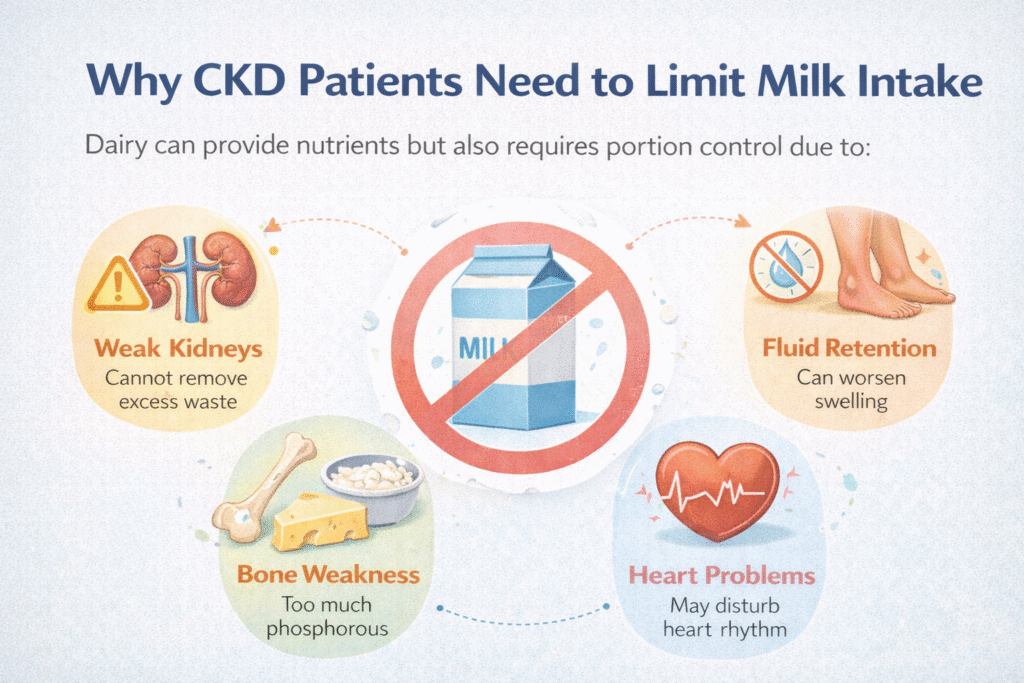
Why CKD Patients Need to Limit Milk Intake
In CKD, kidneys cannot filter minerals effectively. Milk for CKD patients patients become risky when consumed freely because:
- Phosphorus buildup can weaken bones and cause itching
- Excess potassium can affect heart rhythm
- Extra protein waste increases kidney workload
Because of this, dairy intake is usually limited to small servings per day.
In dialysis patients, protein needs increase, but dairy portions still need calculation.
Reasons Milk Needs Limits
- Reduced kidney filtering capacity
- Risk of mineral buildup
- Increased stress on damaged kidneys
How Milk and Dairy Products Affect the Kidneys
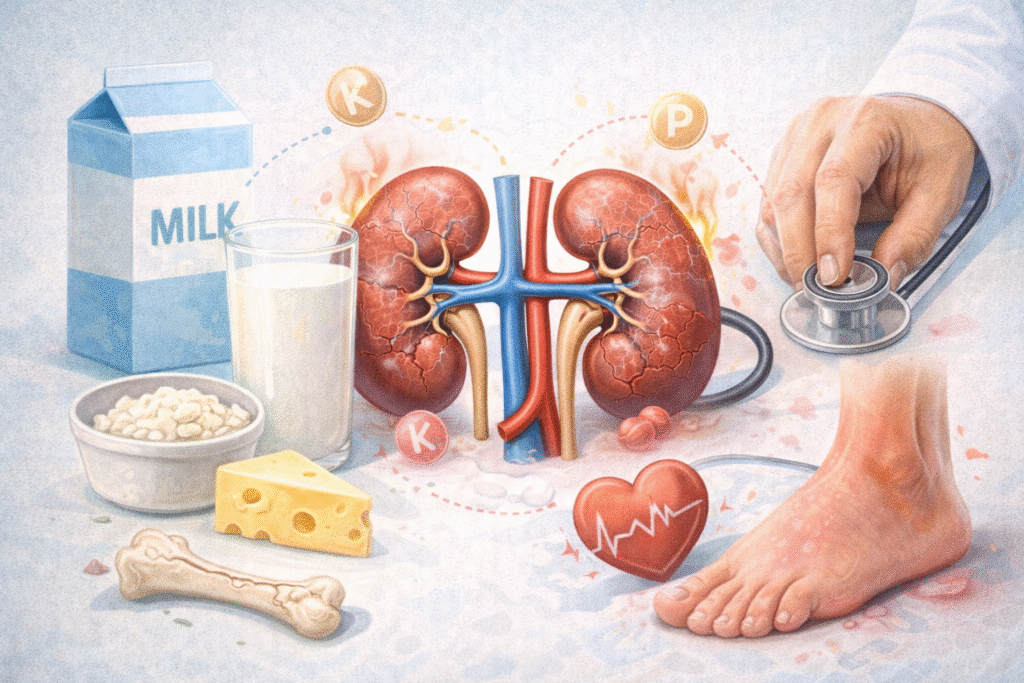
Milk and dairy products for CKD directly increase kidney workload.
Items like full-fat milk, malai, cream, and khoa contain high phosphorus and saturated fat, dairy products for CKD patients, which can worsen kidney stress.
Some patients may tolerate skim milk or diluted milk in small quantities, but this varies from person to person. Medical guidance is essential.
Important Missing Fact: Phosphorus Absorption
(This is an important point patients should understand.)
- Phosphorus from dairy products for CKD patients is highly absorbable (60–80%)
- This makes dairy phosphorus more harmful than plant-based phosphorus
- That is why milk for CKD patients need stricter control than dal portions
What Milk Substitutes Can CKD Patients Use?
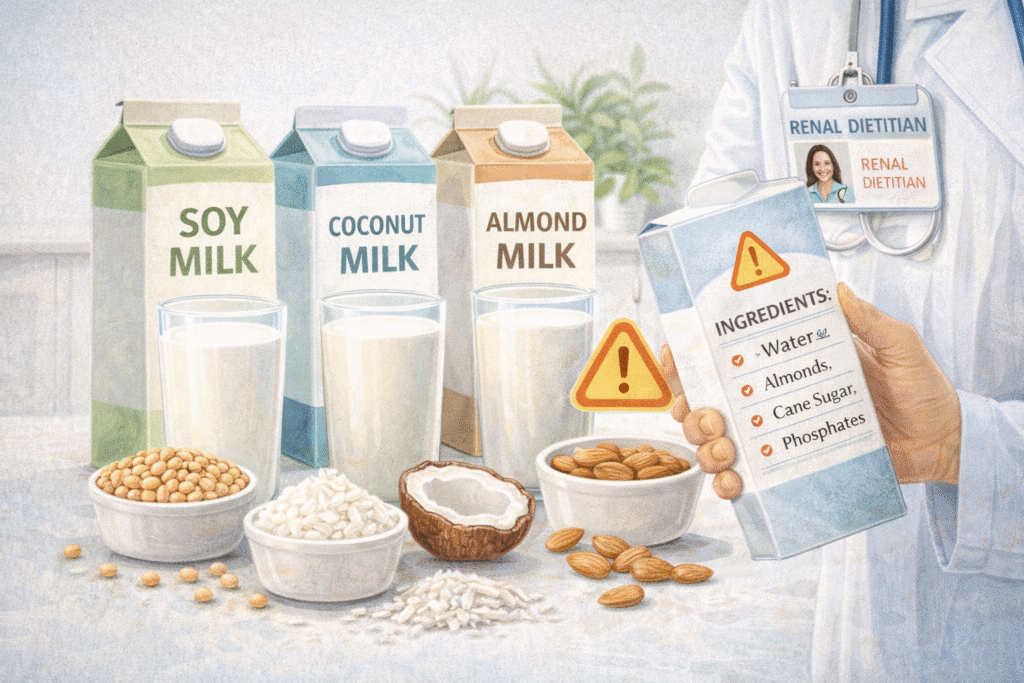
Plant-based & Nut-based milk alternatives may reduce mineral load and offer variety.
These should always be unsweetened and healthy eating approved by a dietitian.
Safer Alternatives (If Approved)
- Unsweetened almond milk
- Coconut milk (small quantity)
- Soy milk (only if potassium and phosphorus are controlled)
ALERT!!
Many packaged plant milks contain added phosphorus additives, so labels must be checked.
Which Milk Is Suitable for CKD Patients?
Choosing the right milk for CKD patients depends on:
- CKD stage
- Dialysis status
- Blood reports (potassium, phosphorus, calcium)
General Guidance
- Avoid full-fat milk and cream
- Use skim milk or diluted cow’s milk if advised
- Follow renal dietitian instructions strictly
Milk and dairy products for CKD patients like curd, paneer, and cheese must be spaced and limited, not taken together in one meal.
Dairy Products That Affect CKD Patients the Most
Usually Restricted or Avoided
- Full-fat milk
- Khoa and condensed milk
- Cheese and processed cheese
- Malai / cream
- Flavoured yogurt
- Whey-based supplements
May Be Allowed in Small Amounts
- Skim milk
- Plain curd
- Paneer (small portion)
- Unsalted butter occasionally
Even allowed items should be included only after professional advice.
Milk and Dairy Products for CKD in Dialysis Patients
Dialysis removes protein from the blood, so protein needs increase.
Milk for CKD patients on dialysis may be allowed 1–2 small servings per day, but excess dairy can still raise phosphorus levels.
Key Dialysis Points
- Higher protein requirement
- Phosphorus control is still necessary
- Individual planning works best
Additional Practical Points
- Milk for CKD patients counts as fluid and must be included in daily fluid allowance
- Drinking milk at night can increase phosphorus load during sleep
- Avoid combining milk with curd, paneer, and cheese on the same day
- Lab reports decide dairy allowance more than symptoms
Conclusion
Milk and dairy products do not need to be feared in CKD, but they must be handled carefully. With correct portion size, right selection, and professional guidance, milk for CKD patients can still include dairy in their diet safely. The key is balance, not excess and not self-restriction. Always adjust dairy intake according to kidney stage and blood test results.
FAQs
What kind of milk can CKD patients drink?
Skim milk or approved plant-based milk in small amounts.
What can replace milk?
Unsweetened almond milk, coconut milk, or approved soy milk.
Is dairy allowed in CKD?
Yes, in controlled portions with medical guidance.
Is curd good for CKD patients?
Curd may be allowed in small quantities.
Can CKD patients drink milk daily?
Depends on kidney stage and lab reports.
Should CKD patients avoid cheese and butter?
Cheese is usually limited. Unsalted butter may be allowed occasionally.
Disclaimer
This content is for educational purposes only. Milk and dairy intake for CKD patients must be individualized based on kidney stage, dialysis status, and blood reports. Always consult your nephrologist or renal dietitian before making dietary changes.

