
Vegetables for CKD Patients | Kidney-Friendly Vegetable Guide
Vegetables are an essential part of a healthy diet, and many healthy eating for CKD patients often wonder how many vegetables they can eat and which types are safe. With careful planning, the right vegetable choices, and proper cooking methods, vegetables can be safely included in a kidney-friendly meal plan.
Vegetables are present in almost every Indian meal, whether as dry sabzi, curries, salads, soups, or mixed with dalia, dal, or sambhar. Vegetables for CKD patients are valued because they are low in fat, cholesterol-free, rich in antioxidants, and provide essential vitamins and fiber. However, not all vegetables are suitable due to their potassium content, especially in advanced kidney disease.
Vegetable intake should always be individualised based on dietary modifications in CKD stage, dialysis status, blood reports, and medical advice.


Can Kidney Patients Eat Vegetables?

Yes, kidney patients can eat vegetables. Vegetables for CKD patients are allowed, but they require thoughtful selection and portion control. Potassium management is the main concern, particularly in advanced CKD and dialysis patients.
Vegetables for CKD patients that are generally safer when eaten in controlled portions include:
- Bottle gourd (lauki)
- Ridge gourd (tori)
- Snake gourd
- Tinda
- Parwal
- Cabbage
- Cauliflower
- Capsicum
- Onion
- French beans
Vegetables for CKD patients should preferably be cooked and consumed in measured portions.
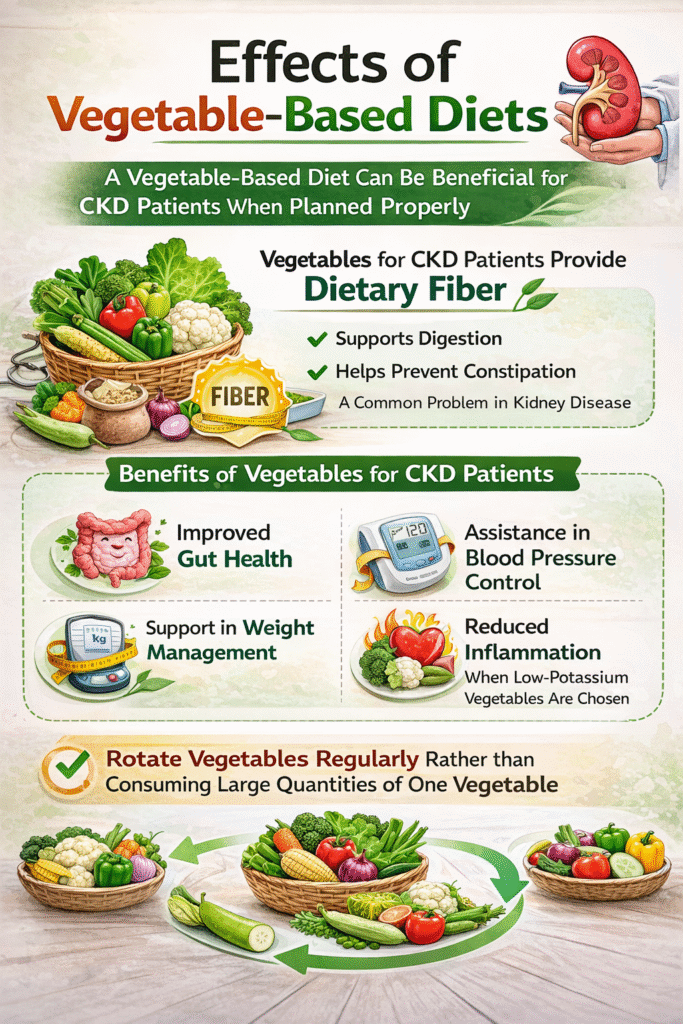
Effects of Vegetable-Based Diets
A vegetable-based diet can be beneficial for CKD patients when planned properly. Vegetables for CKD patients provide dietary fiber, which supports digestion and helps prevent constipation, a common problem in kidney disease.
Benefits of Vegetables for CKD Patients
- Improved gut health
- Support in weight management
- Assistance in blood pressure control
- Reduced inflammation when low-potassium vegetables are chosen
Vegetables for CKD patients should be rotated regularly rather than consuming large quantities of one vegetable.
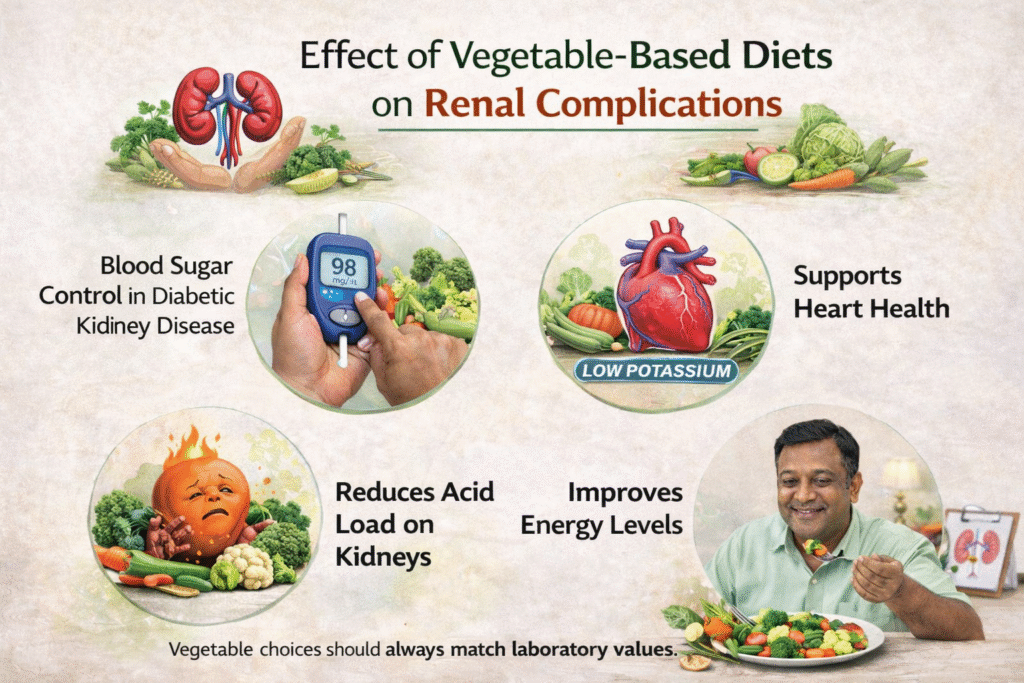
Effect of Vegetable-Based Diets on Renal Complications
Vegetables for CKD patients can help manage several complications related to kidney disease. Since high potassium intake may affect heart rhythm, vegetable selection plays a critical role.
When planned appropriately, vegetables for CKD patients may:
- Help control blood sugar in diabetic kidney disease
- Support heart health
- Reduce acid load on the kidneys
- Improve overall energy levels
Vegetable choices should always match laboratory values and medical advice.
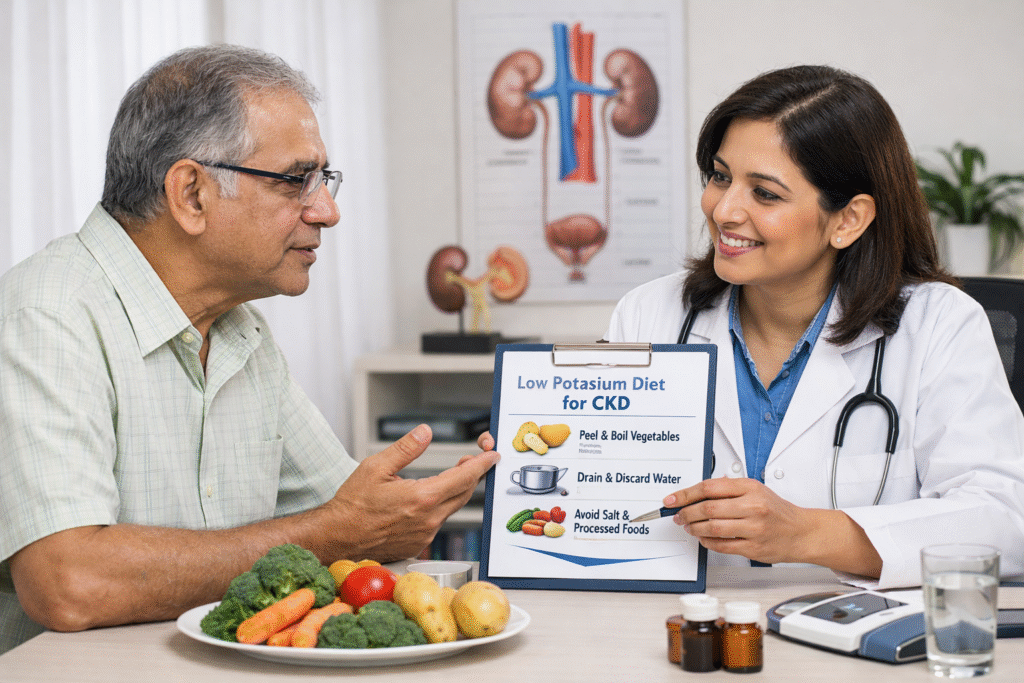
Safe Vegetable Preparation Methods
Vegetables for CKD patients are safer when prepared correctly, as cooking can help reduce potassium content.
Helpful Preparation Tips
- Peel and cut vegetables into small pieces
- Boil the vegetables and discard the water
- Avoid using vegetable boiling water for soups or gravies
- Prefer fresh, home-cooked vegetables over processed foods
- Avoid adding excess salt or packaged masalas
Simple cooking methods are better than heavy gravies or fried preparations.
Vegetables to Limit or Avoid
Vegetables for CKD patients should limit or avoid vegetables high in potassium, such as:
- Potato
- Tomato
- Spinach
- Sweet potato
- Beetroot
- Pumpkin
These vegetables may be allowed occasionally, usually after boiling and discarding the water, and only as advised by the doctor or renal dietitian.
Conclusion
CKD patients do not need to fear vegetables. When chosen moderately, prepared properly, and eaten in reasonable portions, vegetables can be highly beneficial. They support digestion, heart health, energy levels, and overall well-being while helping protect kidney function.
Vegetables for CKD patients should always be part of a balanced, guided diet plan. With awareness and proper planning, CKD patients can continue to enjoy vegetables daily while maintaining eat right to protect your kidney health.
FAQs
What vegetables are good for CKD patients?
Bottle gourd, ridge gourd, snake gourd, tinda, cabbage, cauliflower, onion, and capsicum are generally safe when cooked properly and eaten in controlled portions.
What vegetables have no potassium?
No vegetable is completely potassium-free. Lower-potassium vegetables include bottle gourd, cabbage, cucumber, and ridge gourd, especially after boiling.
Which Indian vegetables are good for kidney patients?
Common Indian vegetables suitable for CKD patients include lauki, tori, parwal, tinda, French beans, and onion in measured quantities.
Can CKD patients eat vegetables daily?
Yes, vegetables can be eaten daily if portion sizes are controlled and vegetables are rotated.
Are raw vegetables safe for CKD patients?
Cooked vegetables are safer. Raw vegetables may increase potassium intake quickly and should be limited unless advised otherwise.
Disclaimer
This content is intended for general awareness and educational purposes only and does not replace medical advice. Dietary needs for CKD patients vary depending on kidney disease stage, blood test values, medications, dialysis status, and individual health conditions. Always consult your nephrologist or renal dietitian before making changes to your diet, including vegetable selection and portion size.

