
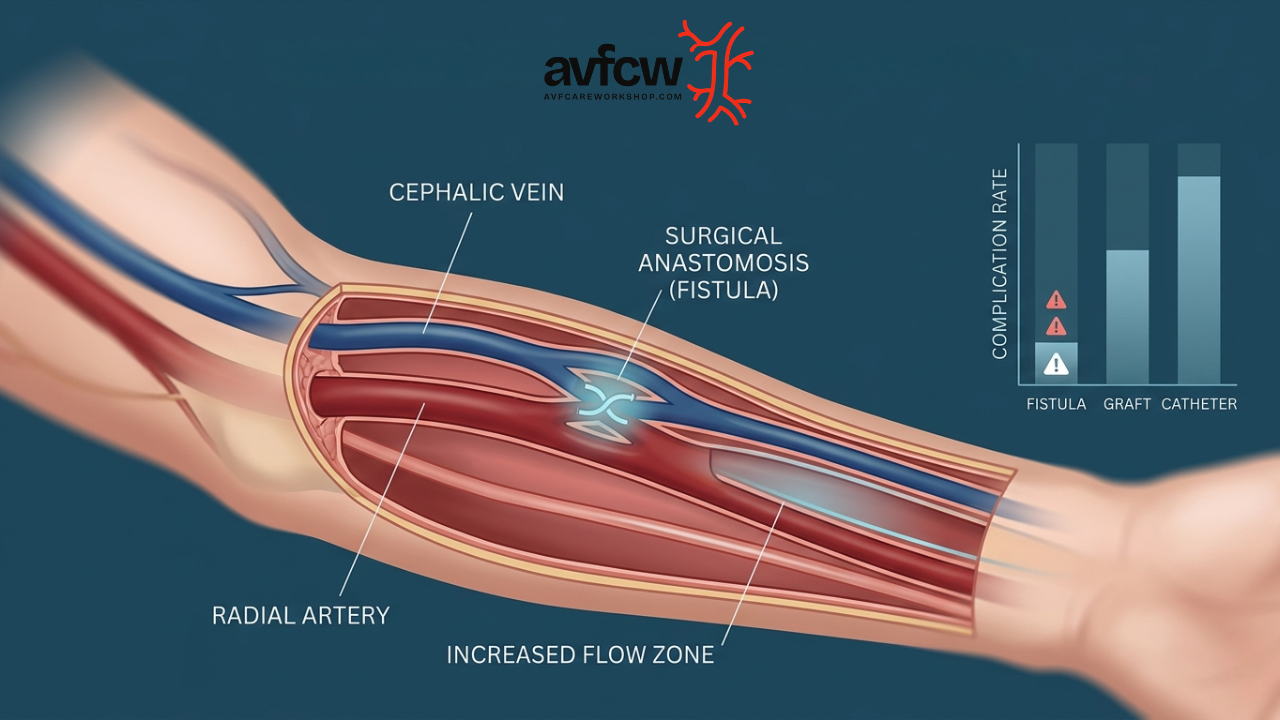
What Is an AV Fistula?
An arteriovenous fistula is a surgical connection between an artery and a vein, usually created in the arm. This direct line creates a stronger blood flow, which makes dialysis safer
and more effective. Completely natural, durable, with relatively few complications, AV fistula surgery in Delhi NCR, and across India is the gold standard access for hemodialysis.
Key points
● Created by joining an artery and vein
● Usually performed in the forearm or upper arm
● Improves blood flow for dialysis
● Recommended before starting dialysis when possible
Types of AV Fistulas
And fistulas need to be placed differently for different patients. The decision is based on vein quality, general health, and planning for dialysis.
Common types
● Radiocephalic fistula at wrist level
● Brachiocephalic fistula at elbow level
● Brachiobasilic fistula with vein transposition
Each type of AV fistula surgery is selected after vein mapping and surgeon evaluation
Symptoms and Causes Leading to AV Fistula Surgery
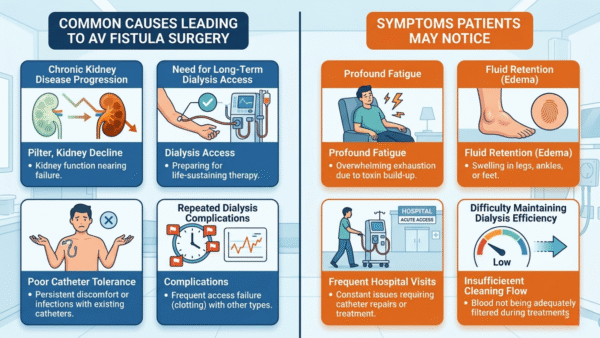
AV fistula surgery is usually planned for chronic kidney disease patients approaching dialysis. However, some symptoms and medical conditions guide the decision.
Common causes
● Chronic kidney disease progression
● Need for long-term dialysis access
● Poor catheter tolerance
● Repeated dialysis complications
Symptoms patients may notice
● Fatigue due to kidney failure
● Fluid retention
● Frequent hospital visits for catheter issues
● Difficulty maintaining dialysis efficiency
Benefits of AV Fistula Surgery
This provides significant advantages when compared to catheters or grafts for AV fistula surgery. It supports safer dialysis and fewer hospital visits.
Major benefits
● Lower infection risk
● Better dialysis efficiency
● Longer lifespan of access
● Reduced clotting risk
● Improved patient comfort
Many dialysis patients feel more confident after AV fistula surgery in Gurgaon because it provides a reliable access for treatment.
AV Fistula Surgery Step-by-Step Procedure
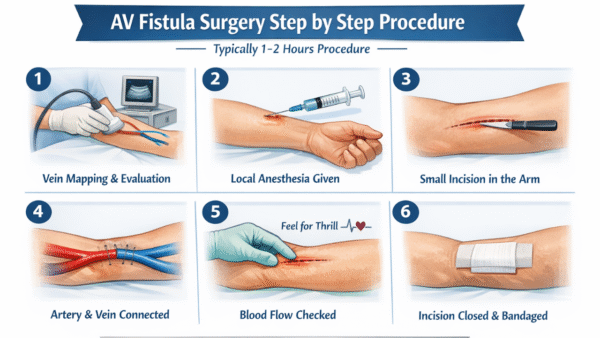
Understanding the process helps reduce anxiety. AV fistula surgery in India is usually done as a day-care or short-stay procedure.
Procedure overview
1. Pre-surgical vein mapping and evaluation
2. Local or regional anesthesia administration
3. A small incision was made in the arm
4. Arteries and veins are carefully connected
5. Blood flow was checked for the thrill sensation
6. Incision closed and dressing applied
Most AV fistula surgery procedures take one to two hours
Recovery After AV Fistula Surgery
Recovery plays a major role in fistula success. Proper care ensures maturation and long-term function.
Recovery expectations
● Mild swelling or discomfort for a few days
● Bruising around the incision area
● Gradual strengthening of the vein over weeks
Care tips
● Keep the arm elevated initially
● Avoid heavy lifting
● Perform fistula exercises if advised
● Check thrill daily
● Maintain hygiene around the surgical site
Av fistula surgery recovery usually allows normal activities within a few days, but fistula maturation takes time.
Role of the Vascular and Endovascular Surgeon and AVF Care Workshop
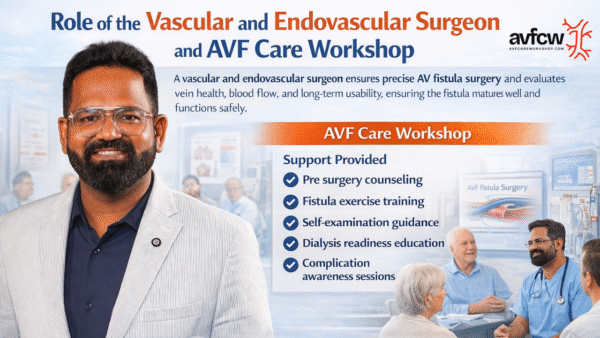
A vascular and endovascular surgeon performs an AV fistula surgery with precision and evaluates vein health, blood flow, and long-term usability. Their expertise ensures the fistula matures well and functions safely.
At AVF Care Workshop in Gurgaon, patients receive structured education before and after av fistula surgery.
Support provided
● Pre surgery counseling
● Fistula exercise training
● Self examination guidance
● Dialysis readiness education
● Complication awareness sessions
This combination of surgical expertise and patient education improves fistula survival and patient confidence.
When Should Patients Plan AV Fistula Surgery?
Timing is critical. Early planning allows the fistula to mature before dialysis becomes urgent.
Ideal planning stage
● CKD stage 4 or advanced stage 3
● Declining kidney function trends
● Nephrologist recommendation
● Difficulty with catheter dialysis
Early AV fistula surgery in Gurgaon prevents emergency catheter use and related complications.
Possible Risks of AV Fistula Surgery
Although AV fistula surgery has a high safety profile, knowledge of the risks can help patients stay alert for early signs and symptoms and take preventive measures.
Potential risks
● Infection
● Clot formation
● Delayed maturation
● Narrowing of the vein
● Rare bleeding complications
Regular monitoring and follow-up reduce these risks significantly
Conclusion
The AV fistula surgery is more than just a medical process. It is the long-term dialysis paradigm that improves the quality of treatment, reduces complications, and promotes patient empowerment. Patients can not only have improved dialysis outcomes but also feel more supported and confident in their care journey with appropriate surgical planning
guided recovery and education through the AVF Care Workshop in India. Early awareness and timely action remain the best strategy for successful dialysis.
If patients and caregivers understand av fistula surgery early, they make informed decisions, avoid emergency access, and support better kidney care. Knowledge, awareness, and
timely action are still the best weapons in maintaining successful dialysis.
For expert AV fistula surgery guidance and support, join the AVF Care Workshop in Delhi NCR, India today.
Frequently Asked Questions
How long does it take for AV fistula to be ready for use after surgery?
Four to eight weeks are needed for fistulas to mature. Some may take longer depending on vein strength and patient health.
How should patient care for the arm after AV fistula surgery?
It stresses patients to avoid pressure on arm, hygiene, certain exercises that need to be performed and checking thrill daily.
How long does an AV fistula last?
A well maintained fistula can last many years and often outperforms grafts and catheters.
How do you repair an AV fistula?
Self-examinations can usually detect severe levels of stenosis, while mild to moderate levels of stenosis generally produce a continuous sound.
What are the risks associated with AV fistula surgery?
Central line placement is associated with risks of infection, & clotting and delayed maturation and stenosis of the vein. Monitoring on a regular basis allows us to identify problems early.

