
Dialysis, Fistula & Exercise
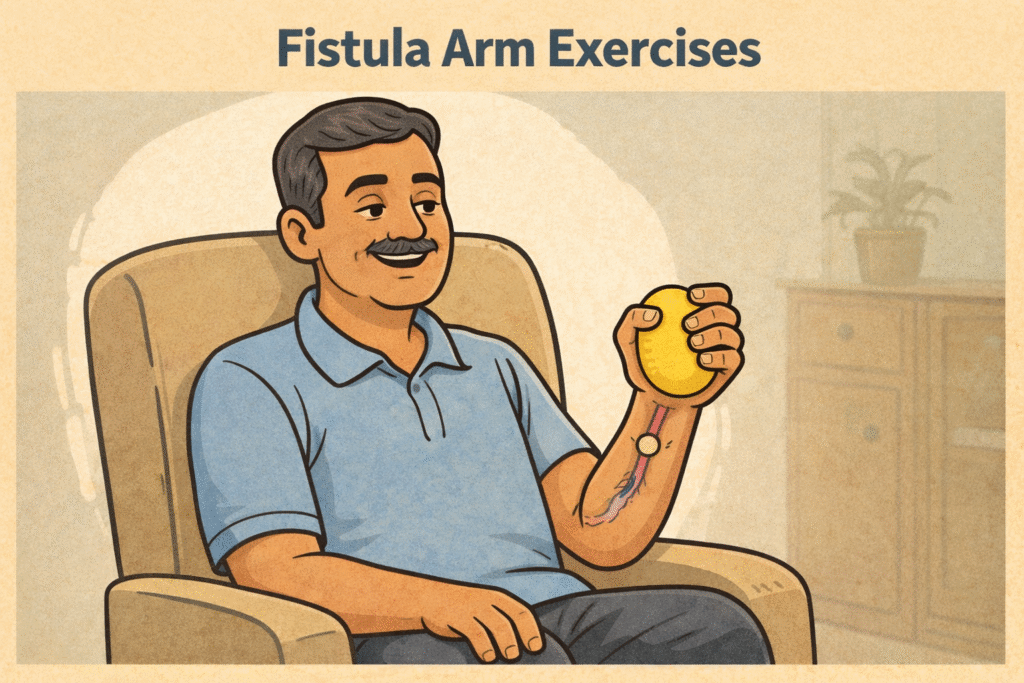
When patients begin dialysis or undergo fistula surgery, something subtle often happens — movement reduces. Fear increases. The arm is protected excessively. Walking decreases. Gradually, strength declines.
Over time, stiffness develops, muscles weaken, and confidence drops.
It is important to understand clearly: most weakness in dialysis patients is not caused only by kidney failure. It is largely due to inactivity.
Muscles weaken when they are not used.
Veins respond better when blood flow increases.
Joints remain healthy when they move.
Exercise is not optional in dialysis care. It is part of treatment.
Fistula Arm Exercise and Care
Many patients believe the fistula arm is fragile. It is not. There are only two strict precautions: do not take IV injections or blood samples from the fistula arm, and do not measure blood pressure on that arm. Apart from these two restrictions, the arm can move normally and should be used in daily life. Avoiding movement causes more harm than using the arm.
Exercises That Help Increase Vein Size
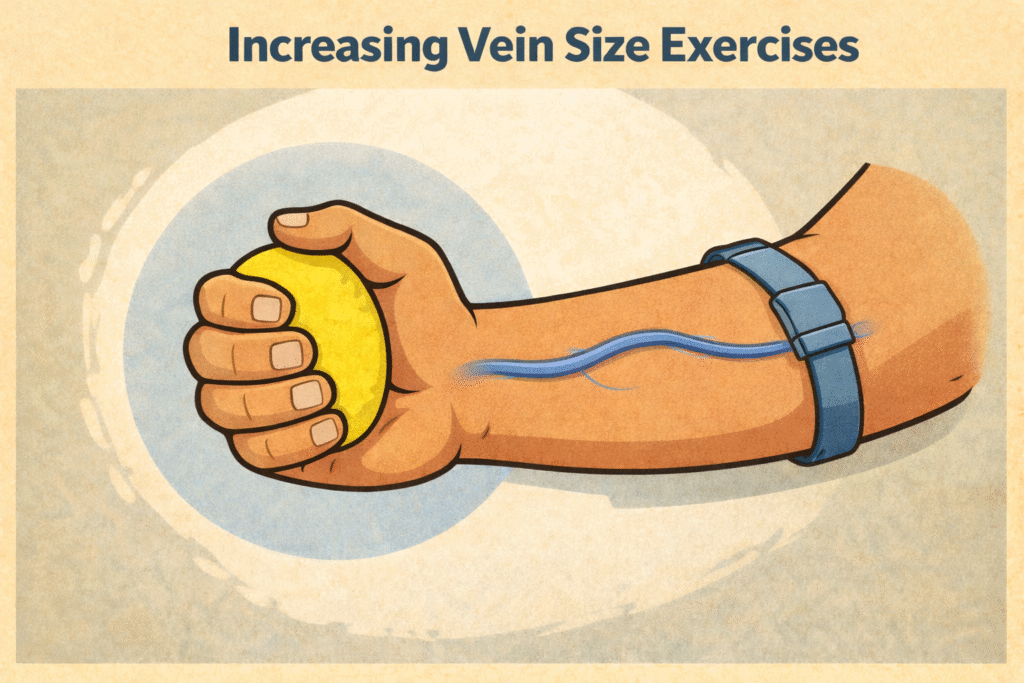
Before fistula surgery, especially when the veins are borderline in size, simple forearm exercises may help improve blood flow. When the forearm muscles contract, they draw more blood into the area. Repeated stimulation of blood flow may help the vein become stronger and sometimes slightly larger.
The simplest exercise is squeezing a soft ball or stress ball. Squeeze gently, hold for a few seconds, and then relax. Repeat this several times a day. This type of exercise is called an isometric exercise, where the muscle tightens without large joint movement.
After surgery, once your surgeon allows it — usually after one or two days — gentle squeezing can begin again. Muscle contraction increases blood flow through the fistula, which supports its maturation.
Later, slow bending and straightening of the elbow, and gentle wrist movements while holding a light object like a small water bottle, can be added. These are called isotonic exercises, where the muscle works while the joint moves.
Both types are useful. The goal is gentle and regular practice, not forceful squeezing. Small daily effort is more beneficial than heavy exercise done occasionally.
Exercises That Help Reduce Hand Discomfort
After fistula creation, some patients feel heaviness, mild pain, or tightness in the hand. Often this happens because the arm is not being used normally.
Gentle opening and closing of the fingers, light squeezing of a soft ball, and slow wrist movements improve circulation. When muscles contract, they draw blood into the forearm. When they relax, blood flows back. This natural pumping improves circulation and reduces discomfort.
Begin slowly. Use a soft object. Perform short sessions multiple times daily.
If there is severe pain, increasing numbness, or worsening coldness in the fingers, medical review is necessary. Mild symptoms often improve with controlled movement.
Exercises That Reduce Shoulder Pain and Joint Stiffness
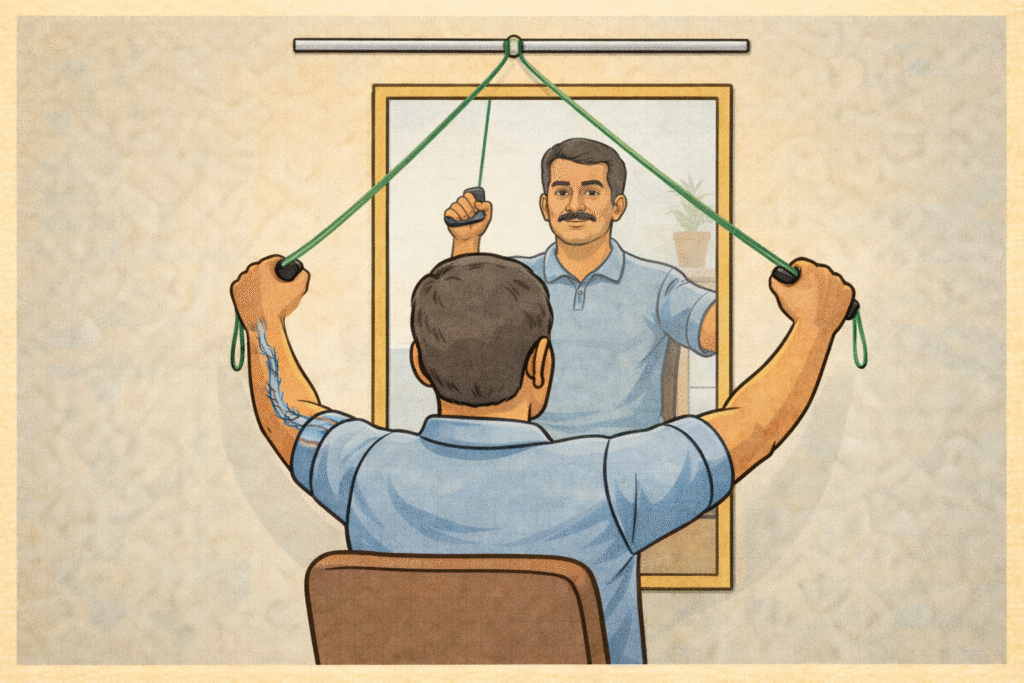
The most common long-term issue after fistula surgery is shoulder stiffness. Patients stop raising the arm overhead. Within weeks, they experience pain while combing hair or reaching up. This can progress to frozen shoulder.
The solution is early, gentle movement.
Move the shoulder forward, sideways, and in circular motions daily. Bend and straighten the elbow completely. Stretch only within comfort limits — never forcefully.
If raising the arm is painful, a simple rope exercise can help. Tie a rope over a rod or door frame above head level. Hold both ends. Pull down with the healthy hand so that the fistula arm slowly rises. This allows safe, controlled stretching without strain.
Regular shoulder movement protects long-term function.
Whole-Body Exercise During Dialysis
Weakness in dialysis patients is frequently due to prolonged bed rest, hospitalization, and reduced activity. Muscle loss begins quickly when the body is inactive. The encouraging part is that this weakness is reversible. In many homes, outdoor walking may not always be practical because of limited space, extreme weather, or pollution. However, exercise does not require a gym. If you have a bed and a chair, you can begin.
General Home-Based Strengthening
Even while lying down, muscles can be activated. Lifting one leg straight and holding it for a few seconds strengthens the thigh. Tightening the thigh muscles while lying down maintains muscle tone. Moving the ankles up and down keeps circulation active. Small water bottles can be used for gentle arm strengthening.
When able to sit and stand, practice standing up from a chair and sitting down slowly. This strengthens the thighs, which are essential for walking. Standing with support and shifting weight from one leg to the other improves balance. Slowly rising onto the toes and coming down strengthens the calf muscles.
These simple movements gradually rebuild strength and confidence.
Consistency is more important than intensity.
Walking and Recovery from Wheelchair Dependence

Many patients become wheelchair-dependent after hospitalization and believe kidney disease has permanently reduced their ability to walk. In most cases, this weakness is due to muscle loss from inactivity rather than irreversible damage. Once dialysis stabilizes breathing and fluid balance, patients try to stand and feel weakness in their knees and thighs. This is deconditioning, not permanent disability. Recovery should be gradual. First, practice sitting up independently. Then repeat standing up and sitting down multiple times. Stand with support and shift weight between legs. Begin walking short distances inside the house. Gradually increase distance as confidence improves. Muscles respond to use. Walking ability returns step by step.
Active Exercise Versus Passive Movement
Passive stretching, where someone else moves your limbs, does not build strength effectively. It may improve flexibility temporarily, but muscles strengthen only when they contract actively.
True rehabilitation requires you to participate. Even small active efforts are more beneficial than prolonged passive therapy.
Mind and Motivation in Recovery
Mental state plays an important role in physical recovery. A discouraged or anxious mind rarely engages fully in exercise. Guided breathing exercises, light yoga, and structured routines can improve motivation and participation.
When patients understand that weakness is reversible and improvement is possible, recovery accelerates.
The Core Message
The fistula arm is not fragile.
Weakness after dialysis is often due to inactivity, not irreversible disease.
Muscles return when retrained. Joints remain healthy when used.
Avoid IV lines and blood pressure checks on the fistula arm. Beyond that, use it normally.
Move daily. Stretch gently. Strengthen gradually.
In dialysis care, exercise is not optional — it is part of treatment.

